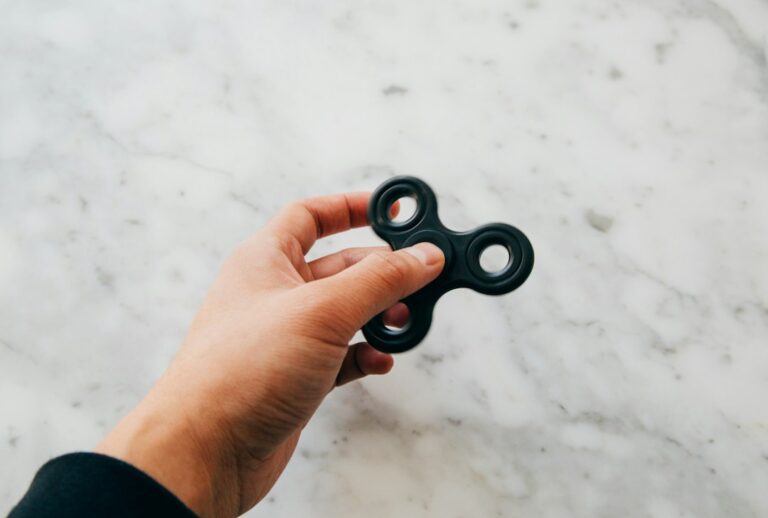

If it needs frequent visual adjustment, makes repeated noise or encourages elaborate manipulation, reserve it for home and test a simpler design at work.
Rotating everyday sensory fidget tools by setting can also make sense: keep a discreet item in a desk drawer, a washable option in a travel bag and a more tactile piece for private use. The measure is practical performance, not appearance or novelty.